




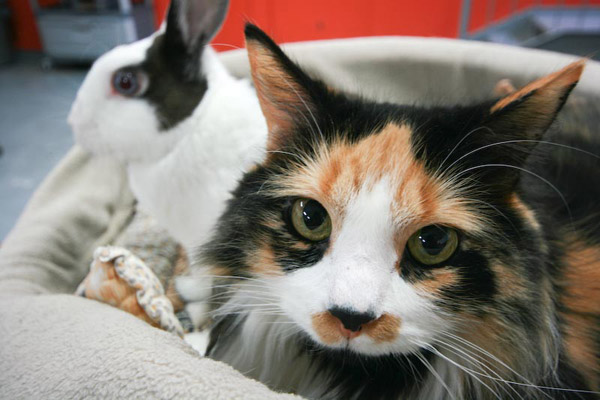
The benefits of animal-assisted therapy are well established. The Douglas Institute has been a pioneer in the field. In fact, it was the first health institution in Quebec to create an integrated zootherapy program in 1985. Thirty years later, the service continues to effectively help patients.
Animal-assisted therapy, or zootherapy, is used in the care of children, teenagers, adults, and elderly people affected by mental health problems. Although it doesn’t constitute a cure, it is a recognized and effective element of the therapeutic process because it can provide the patient with a sense of psychological as well as physical well-being.
The benefits of using animals in therapy:
- They encourage activity
- They offer unconditional love
- They are reassuring and soothing
- Their enthusiasm and love of life is contagious
- They encourage social interaction and contact.
Types of animals
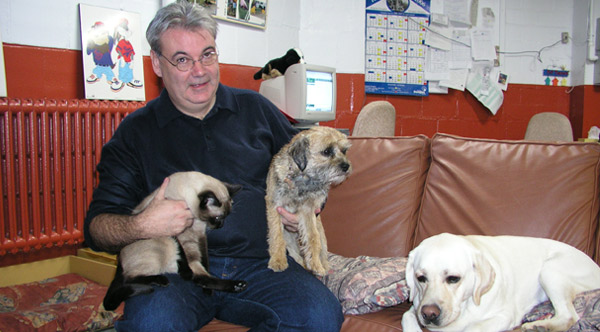
We use different kinds of animals depending on the needs of patients. Dogs can provide energy and love to a depressed adult, but might not be well-suited for a teenager in the midst of an identity crisis who would prefer a ferret, reptile, or rodent. A rabbit, with its softness and gentleness, has a soothing effect on agitated people.
Benefits for children and youth
Most children taking part in animal-assisted therapy at the Douglas suffer from Attention Deficit Disorder (ADD) or a behaviour disorder . The animal enables the patient to gain self-control, feel empathy, and develop social skills.
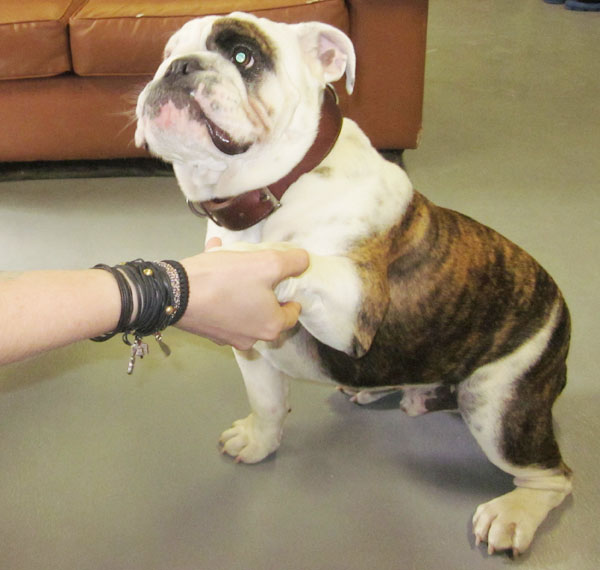
Through simple tasks like bathing, walking, or brushing a dog the child learns to make choices, control his or her impulsivity, and care for others. A shy and reserved child will learn to be assertive by giving commands to a dog and being obeyed. A hypersensitive or autistic child will learn to lessen its fear and hyper-awareness.
By interacting with animals, young patients with anorexia can gain self-confidence.
Benefits for adults
 Animals can motivate and give a sense of obligation. Even patients with depression are often happy to see their animal each week. They will make the effort to get up, go to their meetings, and talk with other people.
Animals can reduce stress. That’s why they are used to treat phobias and anxiety disorders. The Douglas Institute has even trained a Mira dog to accompany a person with agoraphobia. The dog learned to line-up for its master, ease the stress in a situation, and find its way home without help in case of a panic attack.
For people with an animal at home who are currently hospitalized at the Douglas Institute, animal-assisted therapy betters their hospital stay and helps prepare them for the return home.
Benefits for elderly patients
An animal can help patients with Alzheimer’s Disease recall past events, especially those involving animals.
Cognitive abilities are specifically affected in these patients, which is why the animal is beneficial. It stimulates the patient on an emotional level, where he feels most at ease.
The animal provides stimulation; this captures the person’s attention and maintains his contact with reality.
The soft presence of the animal places the patient in a calming and soothing state of mind, which is very important for people with a tendency to react aggressively.
The animal allows a patient to be stimulated emotionally, rather than intellectually.
Information
Frédérique Hébert-Villeneuve
Animal-Assisted Therapy Program
Douglas Institute – Porteous Pavillion
514 761-6131, poste 2135
Frederique_dot_Hebert-Villeneuve_At_douglas_dot_mcgill_dot_ca


