

Between head and heart

This year, the lecturer will be joined by a person either living with a mental illness or helping a friend or relative cope with a mental illness. Camillo Zacchia, PhD, psychologist and senior advisor at the Douglas Mental Health Education Office (MHEO) will once again act as host and facilitator.
For the first time, Mini-Psych School is webcasted live.
Program
Class 1: The brain - Simultaneously strong and fragile
Tuesday, October 11
The brain is a magnificent and superbly complex organ, and many key questions about its function remain unanswered. Learning objectives:

To identify the basic neurobiological mechanisms and key brain regions—such as the amygdala and hippocampus—that are involved in mental illnesses;- To distinguish between a neurological and a psychiatric illness;
- To learn about some of the more recent discoveries into how the memory works.
Lecturer: Véronique Bohbot, Ph.D., Neuroscientist
Classes 2 and 3: Heart and mind - Emotions as a survival tool
Part 1: Tuesday October 18; Part 2: Tuesday, October 25 octobre
Anger, sadness, joy, excitement, fear and anxiety are all emotions that are essential to our survival, but they can also cause us a lot of trouble! Learning objectives:

To know more about how our emotional reactions to life events can either save us or put us at risk of developing a mental disorder;- To better understand our moods and the ways in which they affect us;
- To learn about the most common and the newest psychotherapeutic treatments.
Lecturer: Camillo Zacchia, Ph.D., Psychologist
Class 4: Volatile Emotions - Bipolar and other mood disorders
Tuesday, November 1st
Mood swings can be rough for those who experience the fluctuations, the intervals, the highs and the lows! Such feelings may lead people to think they have a borderline personality disorder, bipolar disorder or another type of mood disorder. It is important, however, to distinguish between what constitutes “normal” emotional behaviour and mood disorder.
Learning objectives:

To better understand the genetic, psychological and environmental stressors that trigger the onset of mood disorders and to differentiate “normal” emotional abilities from emotional behaviours that can be dysfunctional;- To distinguish between certain types of mood disorders, such as borderline personality and bipolar disorders;
- To learn about the main forms of treatment and therapy for bipolar disorders, as well as recent research developments in this field.
Lecturer: Serge Beaulieu, MD, PhD, FRCPC, Medical Chief, Mood, Anxiety and Impulsivity Disorders Program and Bipolar Disorder Program; and Suzane Renaud, MD, psychiatrist.
Class 5 : Hitting bottom - Chronic or episodic depression and burnout ?
Tuesday, November 8
Depression can be a symptom of another mental health issue (such as bipolar or eating disorder) or may occur as a result of a physical health problem (such as cancer or heart disease). It can be chronic or episodic. Learning objectives:

To distinguish between depression and burn-out;- To better understand the treatments and therapies and to review the efficacy of anti-depressants;
- To address other, non-pharmacological preventative means, such as omega-3, St. John’s wort, exercise, and others.
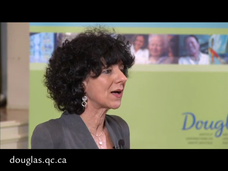
Lecturer: Mimi Israël, MD, FRCPC, Psychiatrist-in-chief
Class 6 : Genes, Environments and Gender - The Eating Disorder “Mix”
Tuesday, November 15
In the Western world, society puts pressure on men and women to be slim—at any cost. We tend to blame social pressures alone for the increasing incidence of anorexia and bulimia, but more often than not they are simply the trigger that sets off an individual's pre-existing vulnerabilities. It is essential to investigate other stressors that can trigger the onset of an eating disorder such as genetics, physical and psychological environments; gender also plays a key role.
Learning objectives:

To understand the contribution of genetic, environmental and psychological effects as risk factors leading to the onset of eating disorders such as anorexia and bulimia nervosa;- To examine recent findings that help explain why anorexia and bulimia nervosa occur more often in women and girls (OR) females;
- To learn about the latest approaches to treating anorexia and bulimia nervosa.
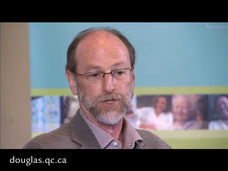
Lecturer: Howard Steiger, PhD, Chief, Eating Disorders Program
Class 7: Losing brain power - Alzheimer's or just normal aging?
Tuesday, November 22
As the human body ages, cognitive abilities and memory inevitably decline. But when this decline occurs at a faster rate than normal; such rapid decline is known as dementia. Alzheimer's disease is a form of dementia characterized by the death of neurons, the cells that play a primary role in brain function. Learning objectives:
- To identify the factors increasing the risk of developing Alzheimer's disease (age, genetics, head injuries, cardiovascular diseases, high blood pressure and diabetes).
- To know how to maintain brain fitness (Mediterranean diet, hypertension control, brain-stimulation exercises)
- To learn about new developments in research, prevention and treatment of dementias.
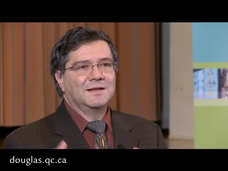
Lecturer: Judes Poirier, PhD, Director of the Molecular Neurobiology Unit.